
A conversation with Charlotte Puxley on creating Ida’s, why a space should leave room for interpretation, and the language of flowers.
Charlotte Puxley began her flower business from an apartment in Singapore, pushing back the sofa to make room to work. More than a decade later, flowers remain what she calls the “epicentre” of her creative world, but that world has expanded considerably.
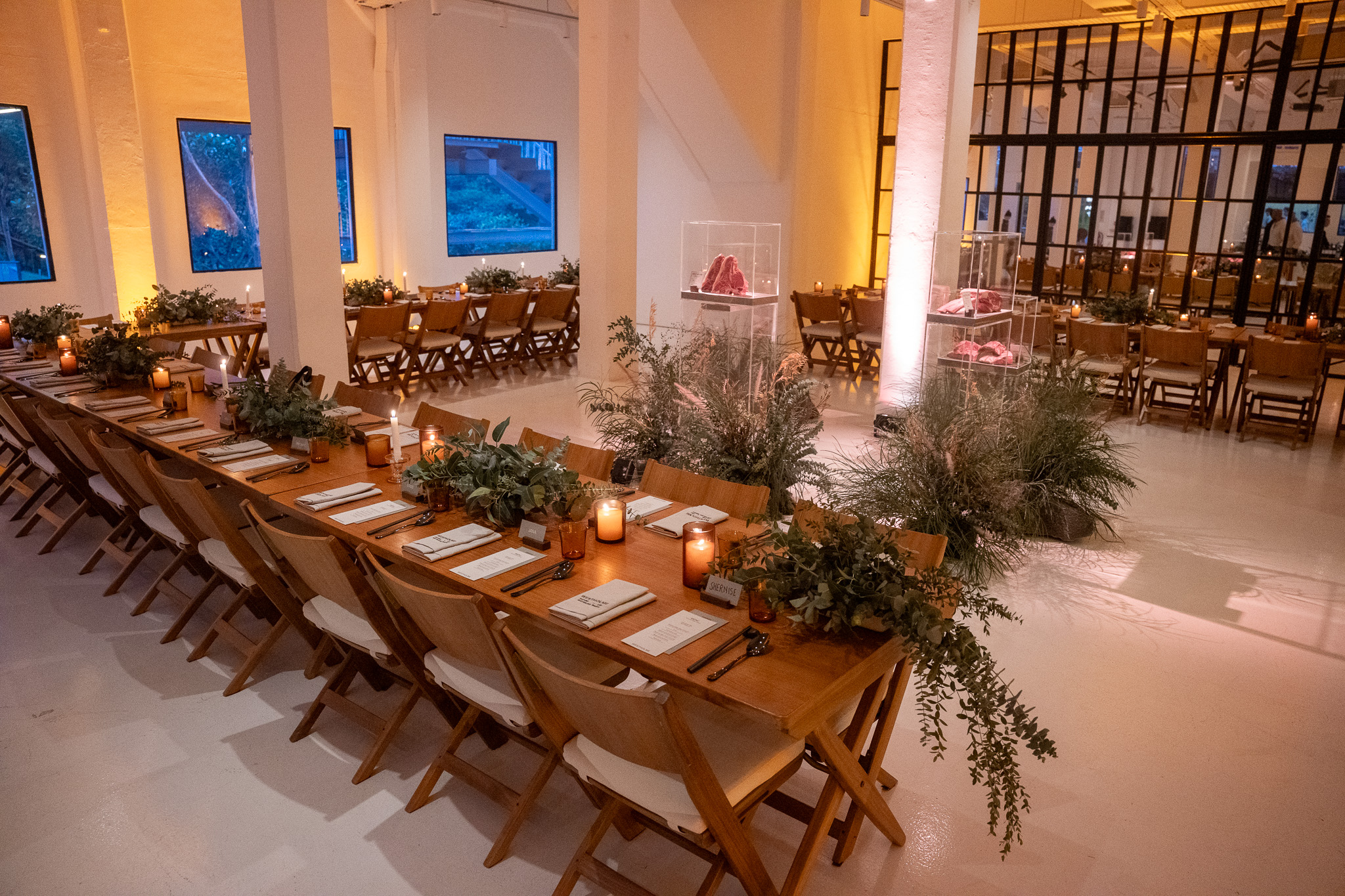
At Gillman Barracks, Charlotte and her husband transformed a derelict space into Ida’s, home to her floral studio alongside a courtyard, bar and dining space designed to host everything from weddings and dinners to brand events.
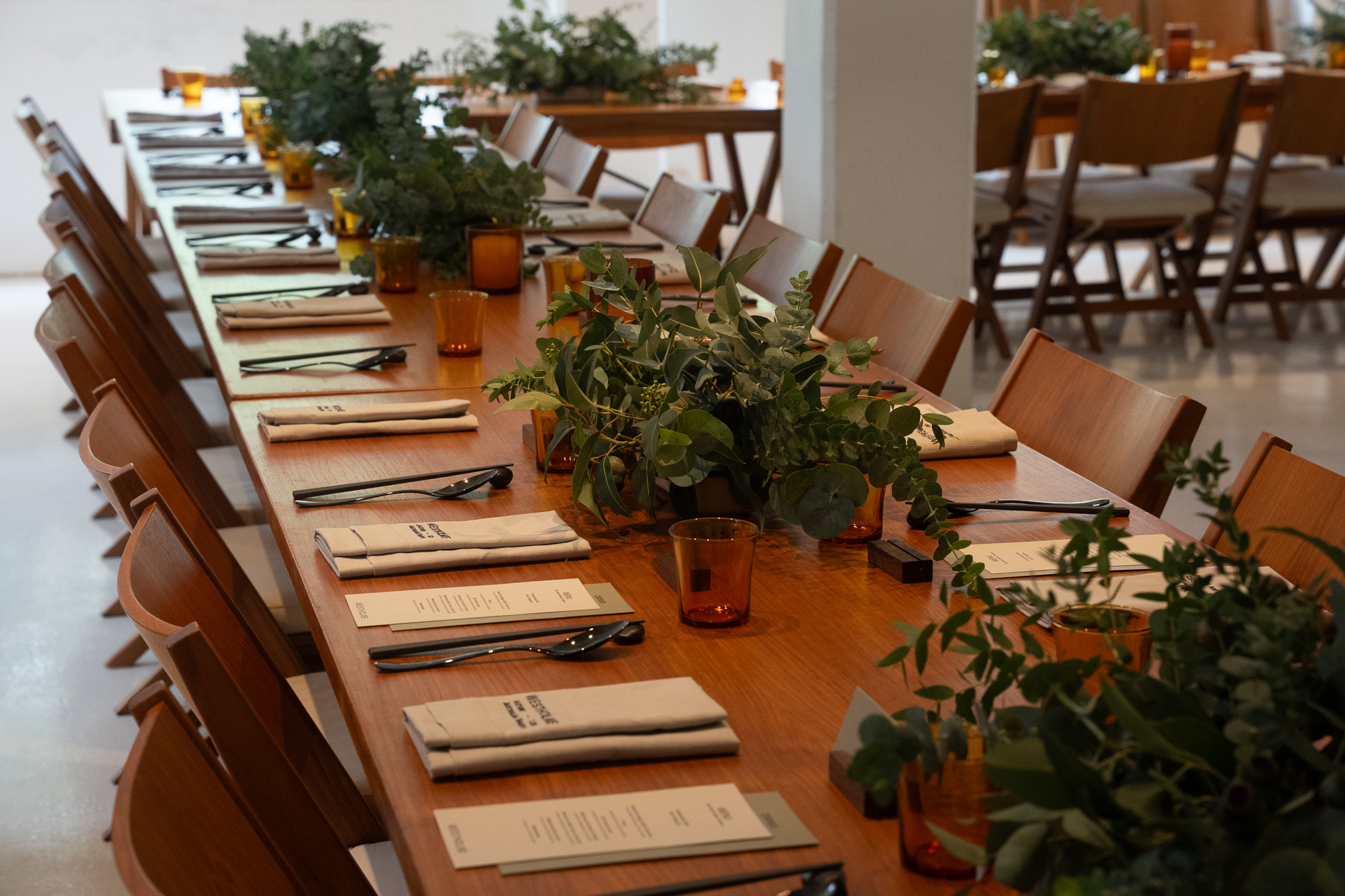
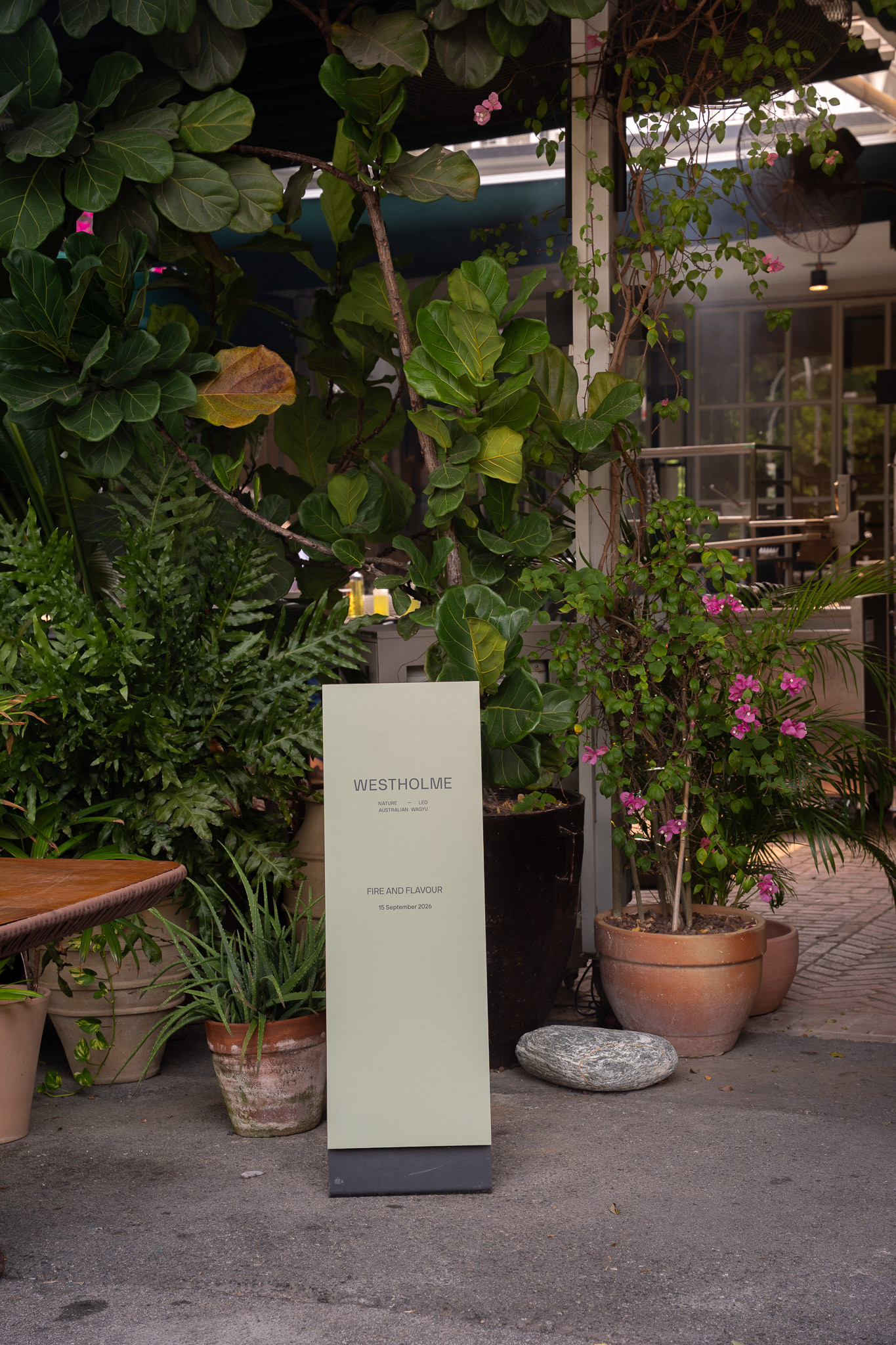
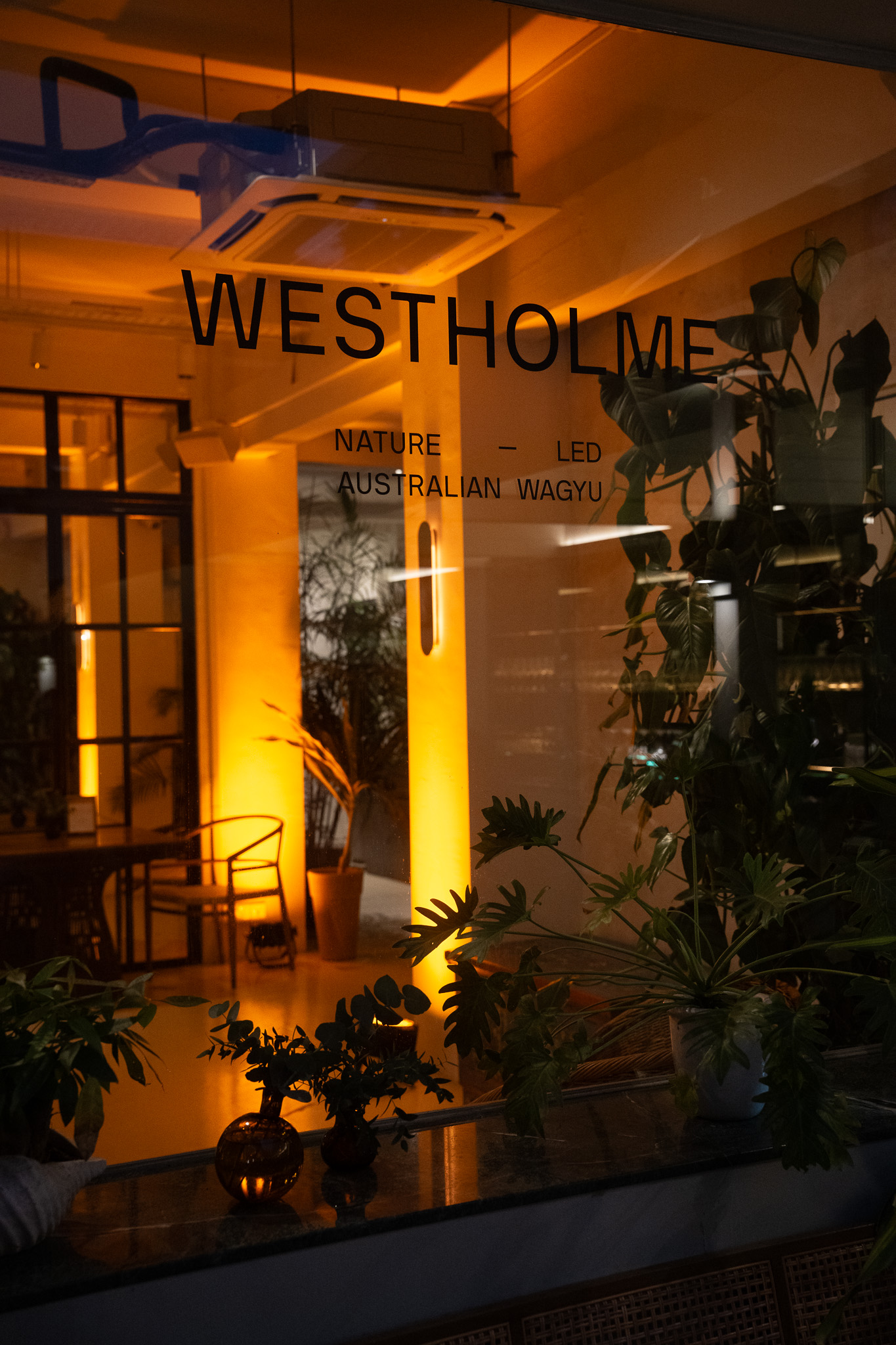
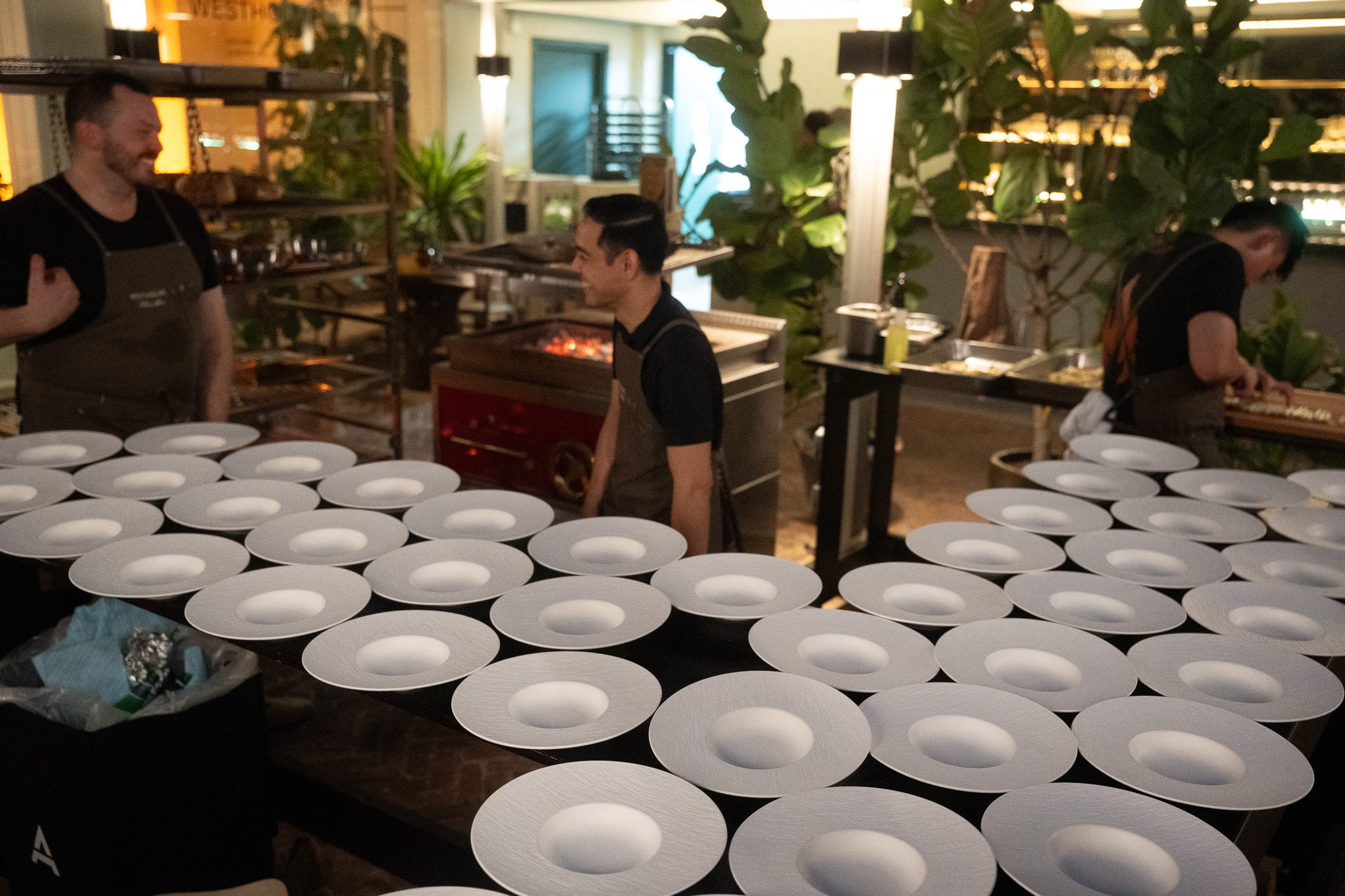
We experienced Ida’s ourselves when we took over the space for Westholme’s tenth anniversary in Singapore, using the courtyard for live-fire cooking before moving guests inside for dinner. Charlotte and her team also created the florals for the evening, interpreting elements of the Australian landscape through materials that could thrive in Singapore.
We met afterwards to talk about creating a place of her own, allowing other people to transform it, why flowers are much more than decoration, and the beauty of things that are not designed to last.
Éloïse: You started with flowers. What made you want to create a place of your own?
Charlotte: I had an apartment in Tiong Bahru. I pushed back the sofa, started making flowers and registered the business.
I built that up, and I’ve had the flower business for about eleven years now. That’s always been a creative journey and really the epicentre of everything.
Then about four years ago I really wanted to find a space for our community as well. We host a lot of workshops, but I wanted our walls to tell our story as much as our creations did.
I saw this derelict space at Gillman Barracks. No one had been in there for about a year. It’s a bit off the beaten track. I always say we’re a poor man’s Dempsey.
But I love that feeling of discovery that comes with getting there. There’s something about people saying, “I never knew this was here,” and I’m like, exactly.
I came home to my husband and said, “I’ve got a new idea. One more idea that I think could work.”
So we applied for the tender, renovated it and put a lot of love into it. It’s honestly been me and my husband doing it together.
Éloïse: What did you want people to feel when they walked in?
Charlotte: A sense of discovery, but also a sense of continuity.
Something creative, with a subtle language that is consistent throughout. Little touches of taste that feel different and unscripted, but at the same time clean and ordered.
It’s about giving people a beautiful context in which they can imagine their own thing, but giving them just enough to hold it.
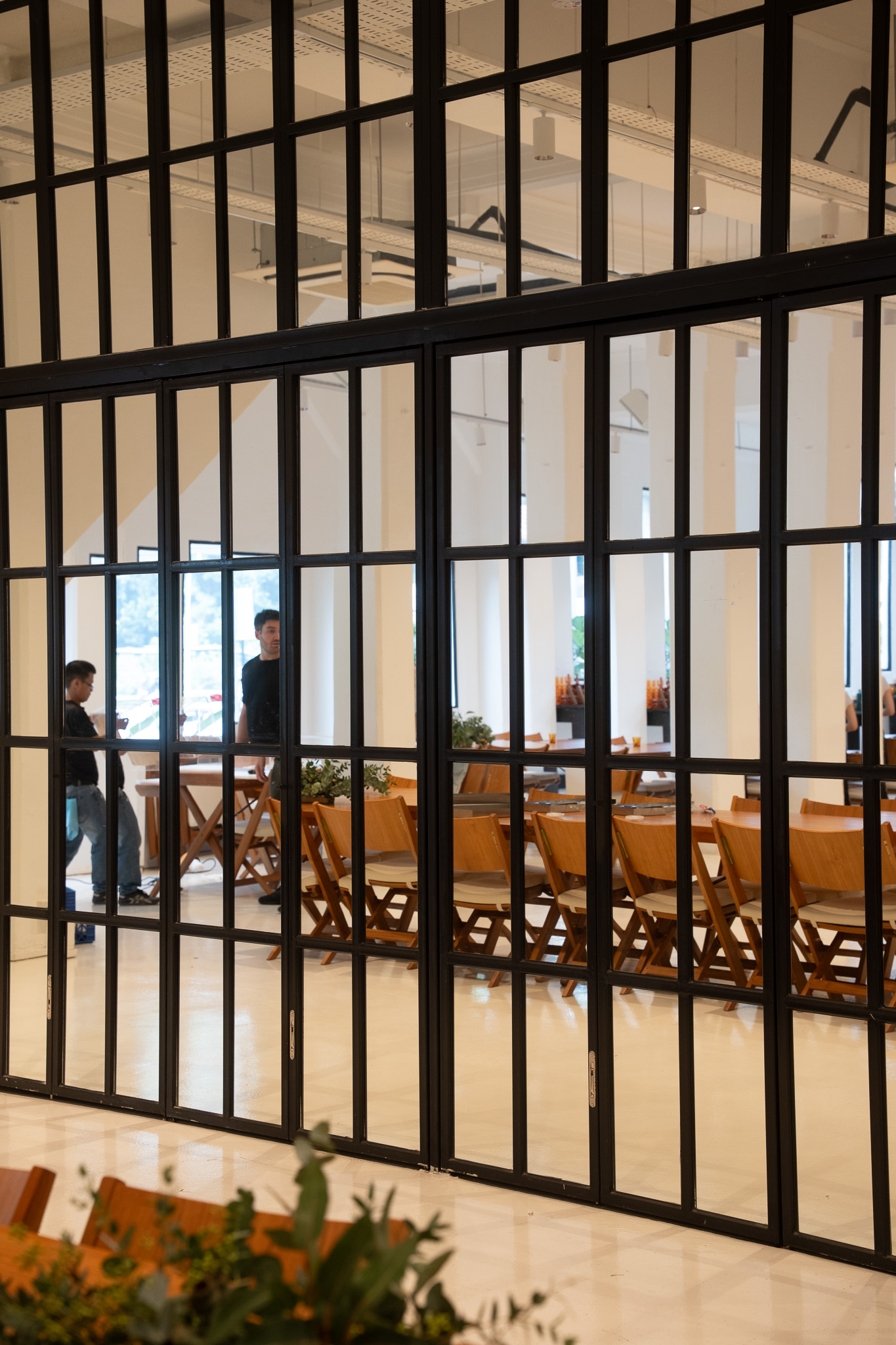
The space was always intended to be a blank canvas so it could be reimagined in different ways, while still honouring the architecture and the natural light.
The courtyard can feel quite small and close and cosy, and then you go into the dining room and it opens up. I find the dining space very calming. The high ceiling, the windows, the mirrors.
It’s amazing seeing how many people have invented and reinvented it.
We had a Harry Potter wedding where they hung candles from the ceiling like the Great Hall. NARS did a product launch and the entire room became pink.
At the beginning you have to get used to that. Then you realise, let it happen. That’s what the space is for. It’s there to be used.
Éloïse: That must require a certain amount of letting go as the person who created it.
Charlotte: Absolutely.
For me, it always comes back to bringing people into the space. The space is at its best when people are enjoying it, experiencing it and discovering that area of Singapore, but also discovering another way to host.
That was really the vision and the idea behind it.
Éloïse: Has owning Ida’s changed the way you think about hospitality?
Charlotte: Honestly, it’s been a big experiment in many ways.
I’m a creative person at heart. There’s a practicality to it too, and that has really been about the team and knowing where I should come in and where I shouldn’t.
As a designer, I can design the space. I was one hundred percent involved in the construction. But hospitality has all these different areas and spheres that go into it, and I’ve loved learning about that.
I add my flowers whenever I can and offer my two cents, but then you have people who really understand the hospitality side and establish the standard and how things should work.
You follow, you fit in, and it becomes a team effort.
Éloïse: Ida’s can host such different things. Is it difficult to keep reinventing the space without it becoming formulaic?
Charlotte: Every time you try to fit everyone into some kind of template, it simply doesn’t work.
We have structures, but they’re always being busted. Everyone is breaking free from them, and for us that’s really important because the moment it becomes too cookie-cutter, the creativity at the heart of it gets lost.
It’s exactly the same in the flower studio.
With our daily orders, you can choose a colour palette but you can never choose the exact flowers. It means there is always creative energy going into what the florists are making. They have a say over that final recipe.
That spreads into the events as well.
Éloïse: Flowers are often treated as decoration, but you seem to see them as much more than that.
Charlotte: It’s like an outfit when you’re getting dressed. Your outfit says so much about you.
And it’s not necessarily just the dress. It’s what you wear it with. How do you do your hair? What are all those combinations?
Those subtle differences express a language, and that’s exactly the same with flowers.
I always say in our classes that flowers are a language. Individual flowers can mean different things in different cultures, but together they accumulate to give a sense, a feeling.
With your event, for example, you were trying to bring something of the Australian landscape into the room.
You don’t need to spread it everywhere. It doesn’t need to be in every corner. You can add certain well-chosen things and suddenly it gives a sense of what something represents without actually saying it.
We see that in weddings too, and even in our daily florals. Big moments happen in people’s lives. They have a baby, they’re ill, whatever it is, and you’re painting a picture for someone with a flower palette.
Sometimes that can convey so much more than a message can.
There’s real poetry in it.
Éloïse: There’s also something very temporary about flowers. Does that impermanence matter to you?
Charlotte: I think that’s part of the soul of it.
Flowers are temporary, and that’s something we come back to again and again. The beauty is that they represent a sentiment or a moment in your life, whatever that moment was.
And then they die, and that’s it.
They’re not stuck in the corner for five months gathering dust. My mother-in-law is Dutch and she has fake tulips in the corner. Every time I go and stay I’m like, “We have to get rid of them now.”
She knows. The florist is here.
Éloïse: How important is it that the flowers respond to the place they are actually in?
Charlotte: Flowers aren’t designed to travel that far.
There is much more honouring of what is local now, which is really good. There are so many flowers we simply don’t entertain using here because I can’t watch them disintegrate in front of me.
I actually started growing flowers myself about three years ago. We had this forgotten patch of garden at home and I decided it was time.
I became completely obsessed.
We grew marigolds, zinnias, sunflowers, all sorts of things. So it can be done here. I needed to know that it could be done.
Whether commercially it ends up being a farm in Malaysia or something else, I think there is so much scope for it. Someone needs to do it.
I also forage quite a lot, so many of the grasses we used for your event came from our garden. We use local as much as possible.
Éloïse: With Westholme, the brief was to evoke the Australian landscape in Singapore. How did you approach that without simply trying to recreate Australia?
Charlotte: You look at what is actually around you.
Singapore has these huge fan palms and all these amazing things that appear out of the jungle. But then you also have lemongrass and grasses and plants that are very happy here and can give you the right feeling.
Australia has incredible natives, but it’s about looking at things rather than simply thinking, “This has to be this exact plant.”
It’s trial and error.
And sometimes something works in a way you weren’t expecting.
Éloïse: When you design flowers for an event, how much are you thinking about the rest of the environment around them?
Charlotte: Setting is everything.
Lighting is really important. Really important.
And honestly, you can do so little with the flowers beyond that if the setting is right, because it’s also about their architectural shape, the negative space against the positive.
More can feel abundant, but more is not necessarily always the way forward. It depends what that person wants to say with their event.
A wedding might be about nostalgic memories. Someone might want to honour a place or a culture, or give people a sense of romance.
You try to find those key pointers. What conversations do you want to happen around that table?
Then you can translate that into colour, material and flowers.
Sometimes someone brings us an image. Sometimes they say, “This is my dress.”
The inspiration can come from absolutely anywhere.
But the important thing is avoiding that cookie-cutter approach so that the process remains authentic. We’ve never really had proper packages for weddings or events because every process is individual in the end.


PLACE
The Killingworth Castle
The Cotswolds, England
"We have to provide a level of experience that makes it worth the journey."