-edit.png)
A conversation in the Cotswolds
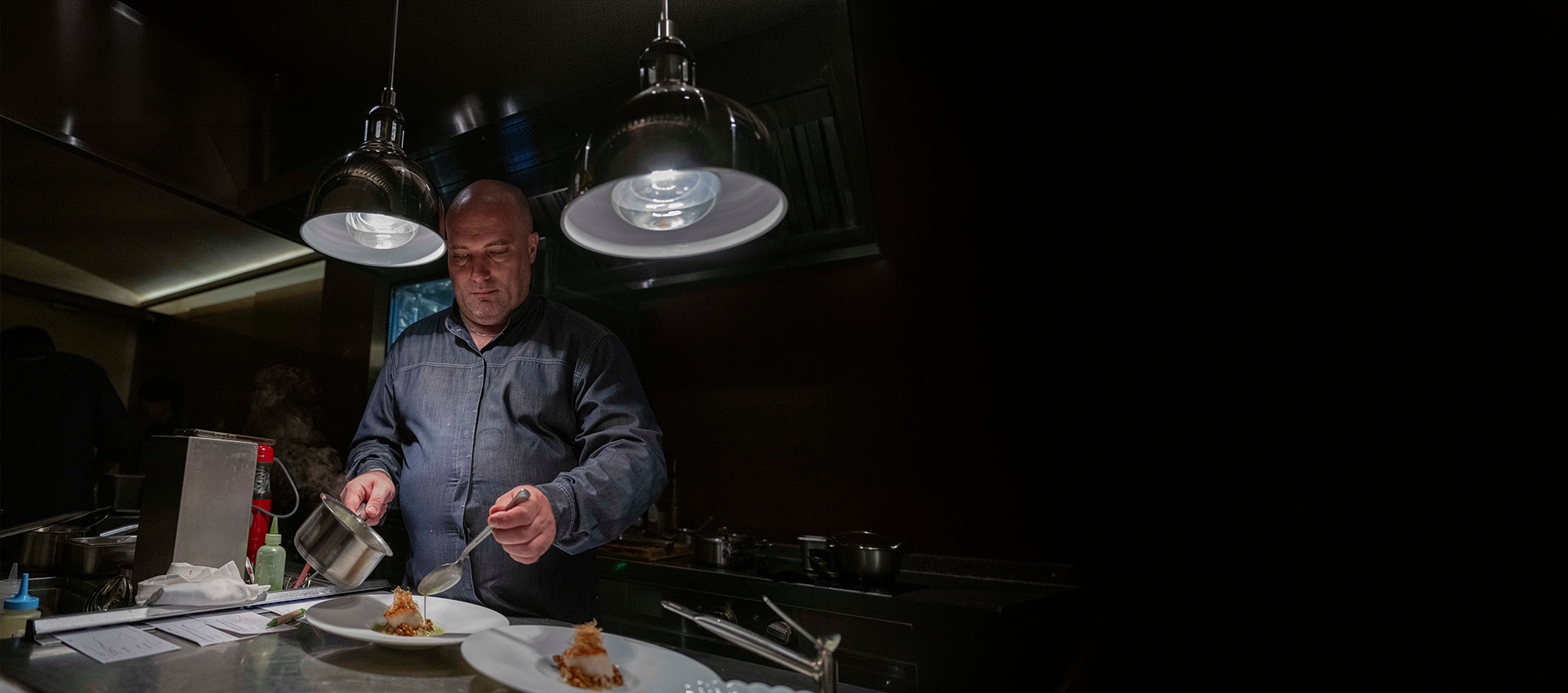
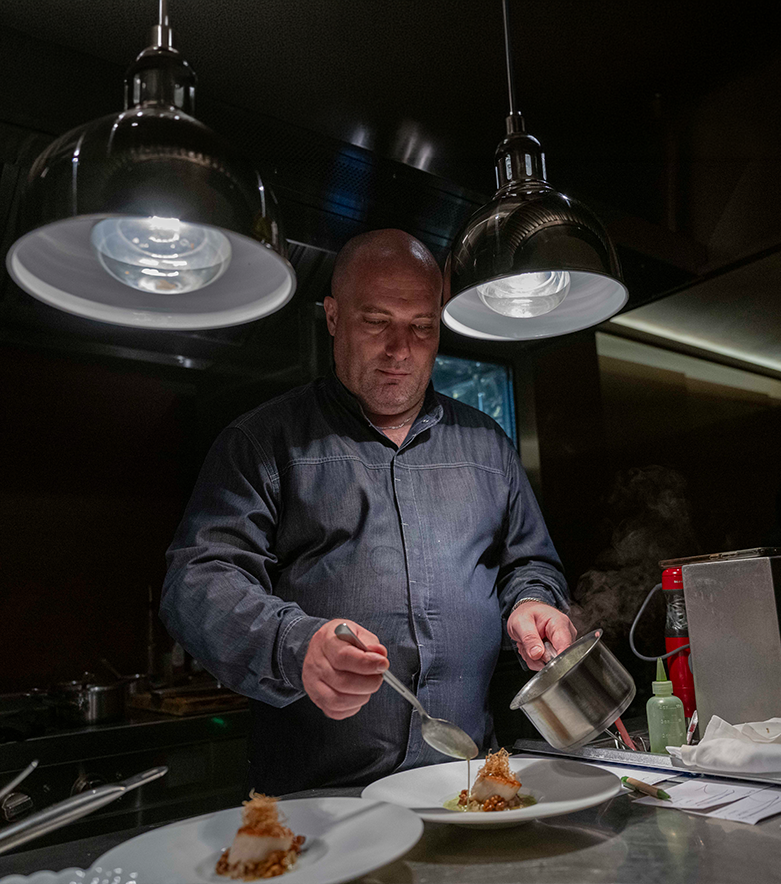
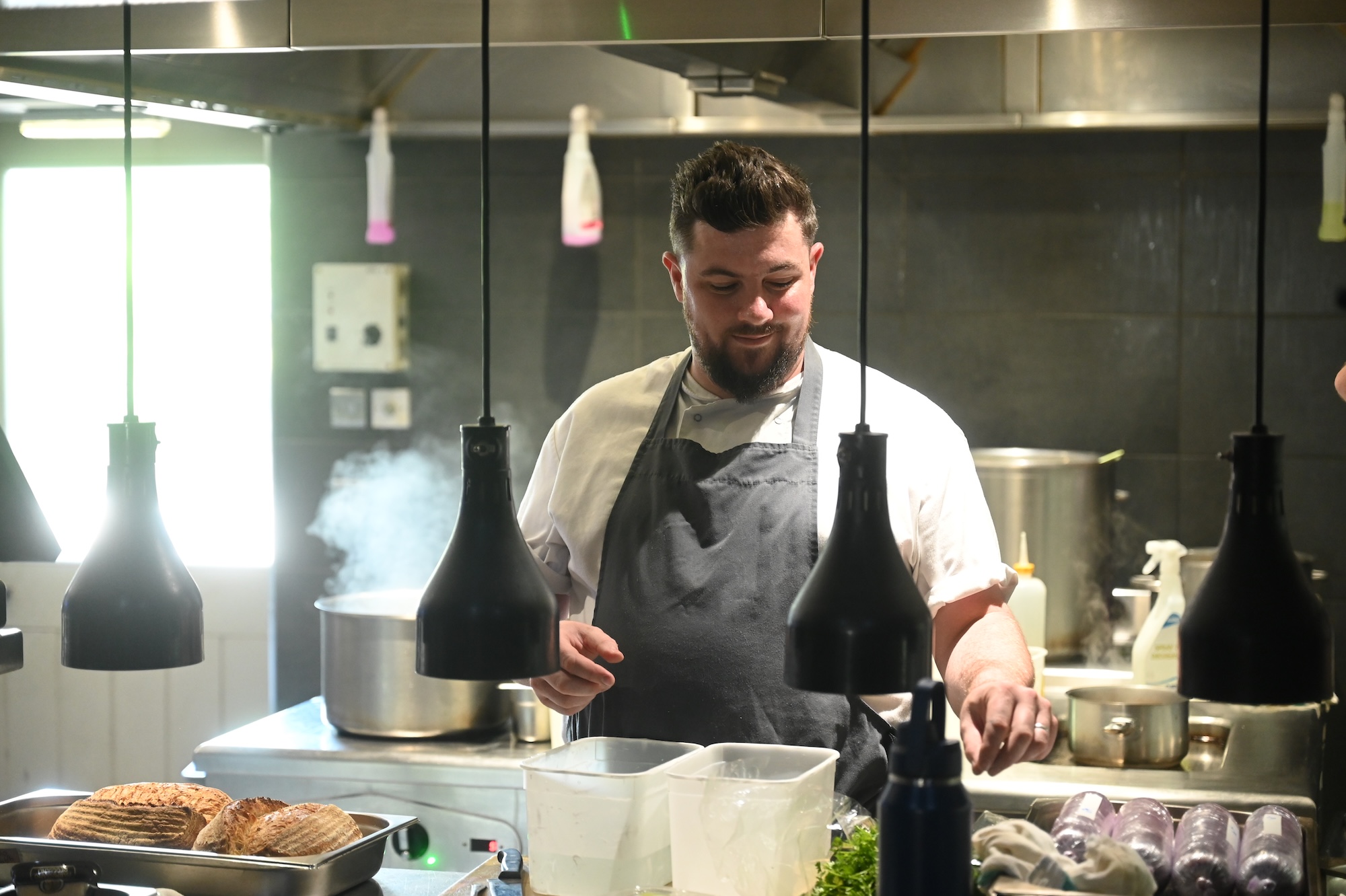
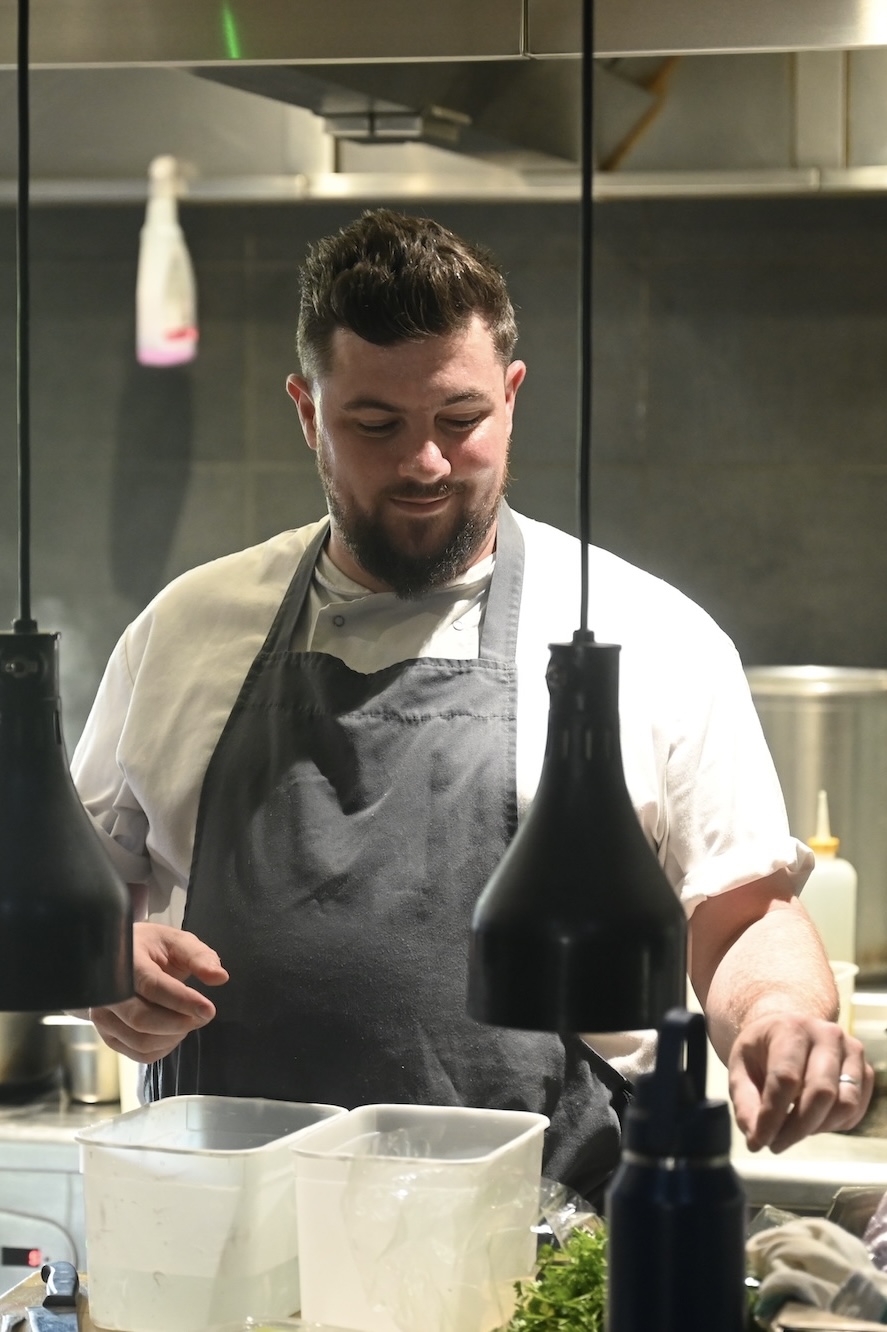
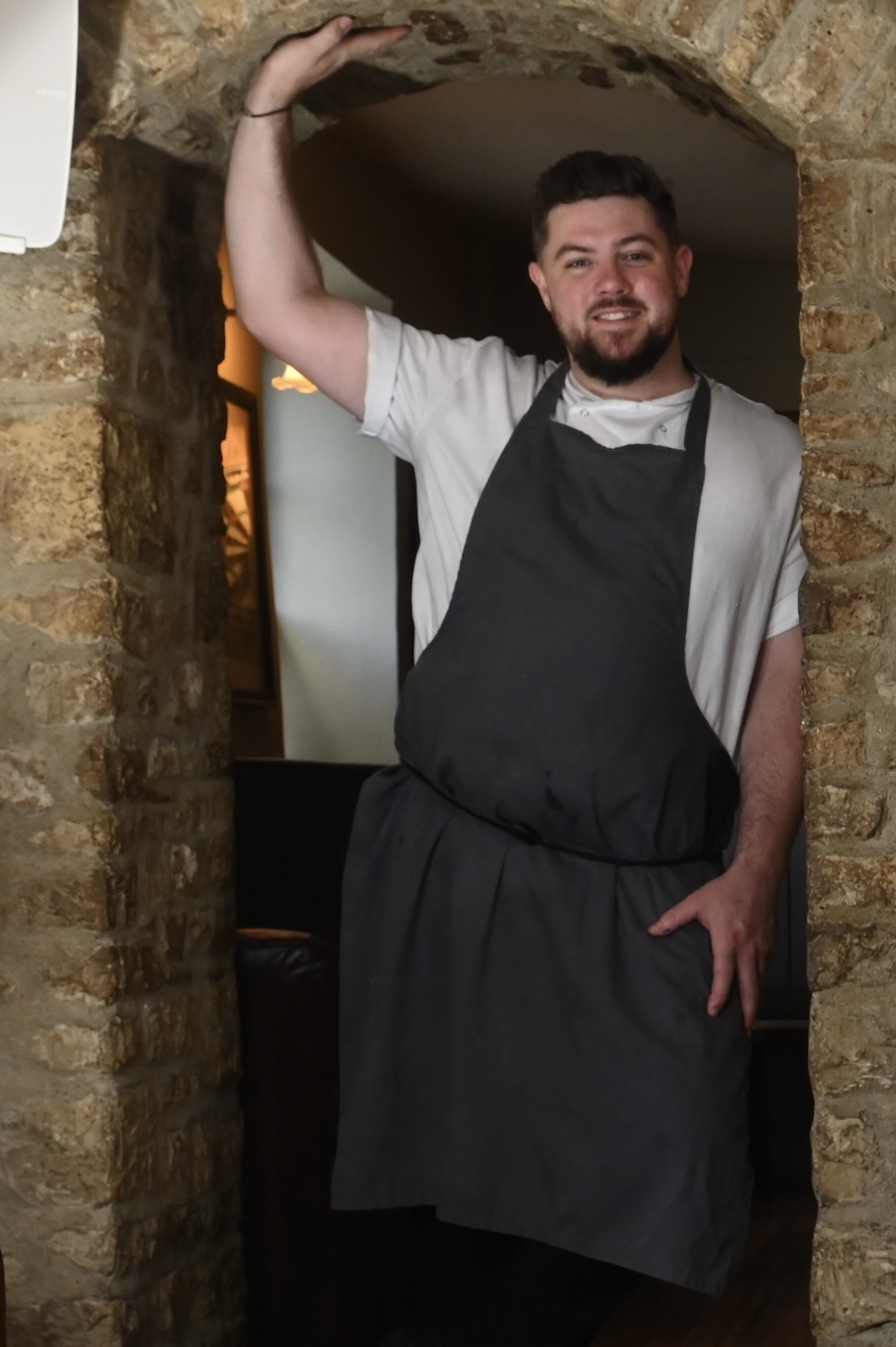
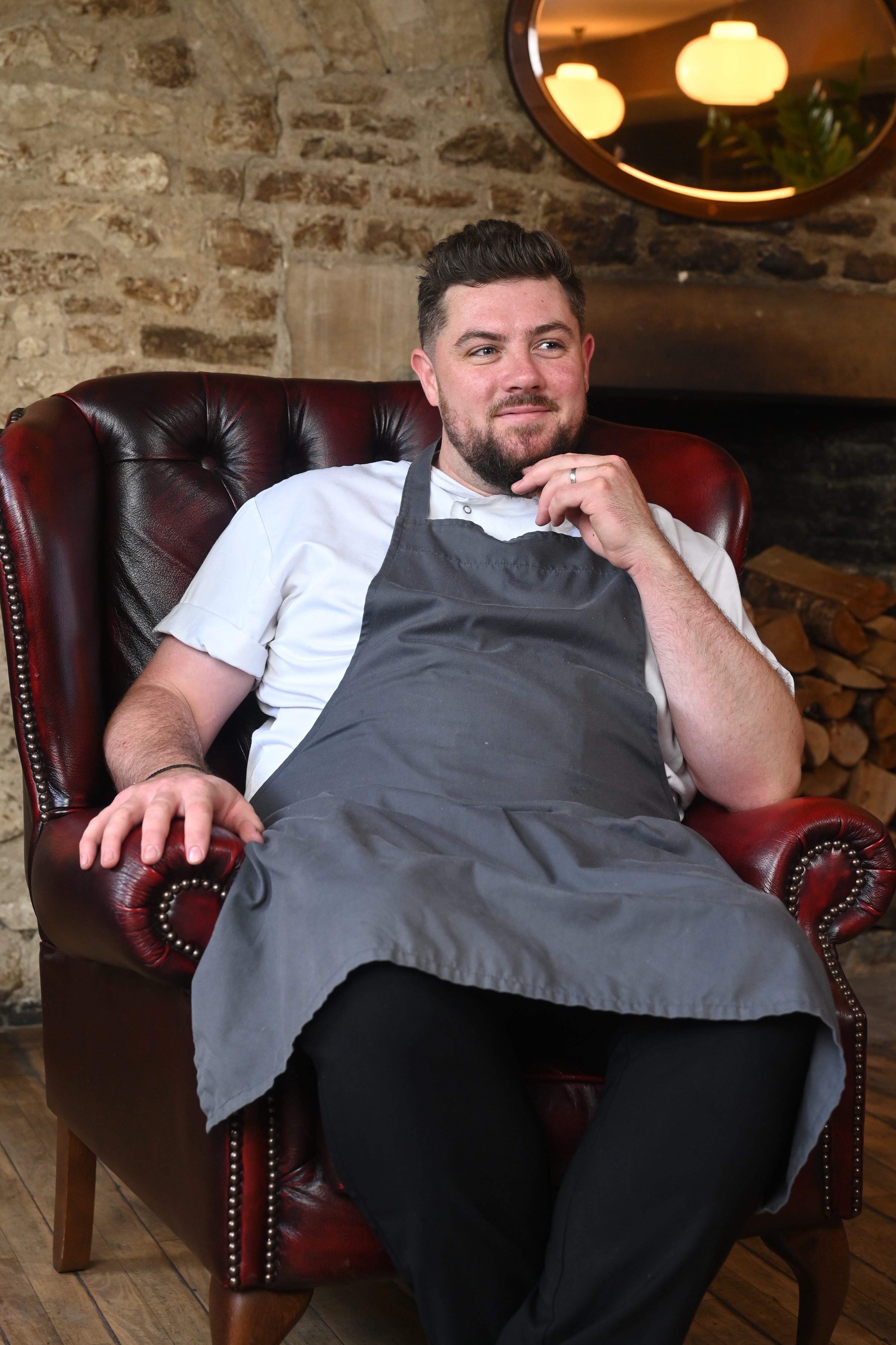
We spoke with Rob Mason, Head Chef at The Killingworth Castle in the Oxfordshire Cotswolds, a historic pub that has been recommended by the Michelin Guide for 14 consecutive years and currently holds three AA Rosettes for Culinary Excellence.
Our conversation took place after an evening in which dinner had become part of something much larger. Guests weren't simply sitting down to eat. Food, performance and atmosphere had been choreographed together as part of an immersive Secret Theatre experience.
We talked about learning to cook nose-to-tail at the beginning of his career, allowing the seasons to dictate a menu, knowing when food should take centre stage and when it should support everything happening around it, and the temporary dining experience he'd create if given complete freedom.
What first made you want to become a chef?
I just enjoyed cooking when I was young. My mum and my nan were always cooking around the house, so I was always involved.
Then I landed myself a little job pot washing and got into it via that. I fell into something I was kind of good at. I enjoyed being in the kitchen, and it just spiralled from there. Here we are, all those years later.
.jpeg)
“The seasons design the menu for me.”
Was there a kitchen or chef early in your career that fundamentally shaped the way you cook today?
I started my journey working for Jamie Oliver's parents at their village pub. I spent two and a half years there at the very start of my career, so it was a really good foundation and really good cookery.
We used all of the animal. There was sustainability in using everything, being creative with no waste and that nose-to-tail kind of thinking. When you learn that at the beginning, it becomes ingrained in you.
That was my starting block down in Essex.
I moved up to the Midlands when I met my now wife, and I've spent the last 12 to 15 years working my way around and doing some really cool stuff.
I worked at Brockencote Hall and then Hampton Manor, which had a Michelin star and four Rosettes. That was much more refined, but I was still overseeing the hotel, which was also a massive wedding venue.
Then I moved into my first real head chef role in Malvern, at a 35-room hotel. We won three Rosettes in the same year the Killingworth did, which is actually when I first met Jim.
I came back here on agency at the end of last summer to help out, and I'm still here now.
Jim's a great guy to work for. I'm a long way from home, but there aren't a lot of good bosses out there, so I think that's what has made me stay. The Killingworth was already in a really good place. For me, it was about building and working on what they'd already done.
Did designing the menu for tonight's immersive experience change the way you approached the food compared with a normal service?
There were little adaptations to make the service easier and allow the performance to flow into each course seamlessly. That was really important. We had to think about the logistics, the service and where the breaks would be.
If we'd tried to do something too crazy and it slowed everything down, the two wouldn't have worked well together.
But the food we do is seasonal, local and based on good-quality produce, so we didn't have to change the food too much. It was more about how we went about doing it, fitting in with everyone else and making the night seamless.
(1).jpeg)
.jpeg)
How do you create dishes that support a storyline without competing with it?
I think that was part of the brief for me, not trying to compete with it.
They're doing this amazing immersive experience, and I think the food is there to complement that.
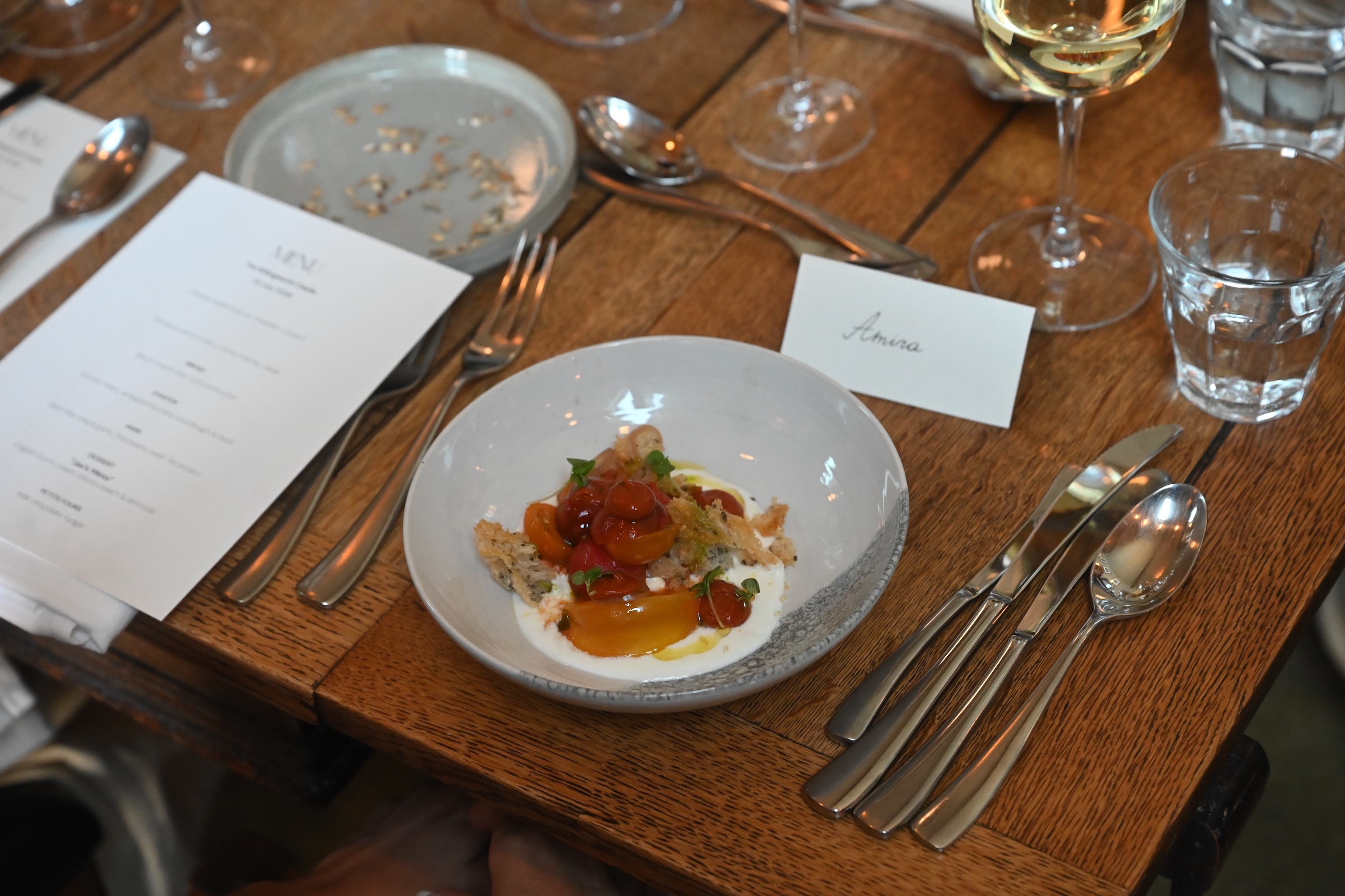
We used some really cool in-season produce. We had amazing blood peaches that are in season at the moment, for example. That's a very easy way of using a fantastic stone fruit.
The tomatoes worked in the same way. They're nice and red and messy.
When you work with the seasons, it's quite easy to let them dictate what you cook and then tweak things and match them accordingly.
The seasons design the menu for me. That's how I work here.
Do you think guests experience the food differently because it's part of an immersive setting?
I think so, but in a positive way.
Normally, for instance, we'd serve bread when the guests are ready. But to enhance the evening and allow everything to flow, we had it ready for them. We selected a cold starter so that could be ready too.
There was a lot of thought behind why certain things were the way they were, simply to make the guests' experience work with the performance.
We didn't want the two to crash.
Where do you hope your career takes you over the next five or ten years?
I really don't know. Through my journey so far I've had three kids, got married and done lots of stuff in the background as well.
For me, it's about creating something really special, wherever that is. Creating something that's unique to the place, and just continuing to evolve and move.
I've had a lot of time to work my way around different places and learn a lot. I feel like now it's time to settle down somewhere and call something my own. To put my stamp on it properly.
I've worked at some really cool places, but it's now time to make my own cool place, if I'm honest.
I think that's my next five to ten years.
Is there a dish or technique you're still chasing or trying to perfect?
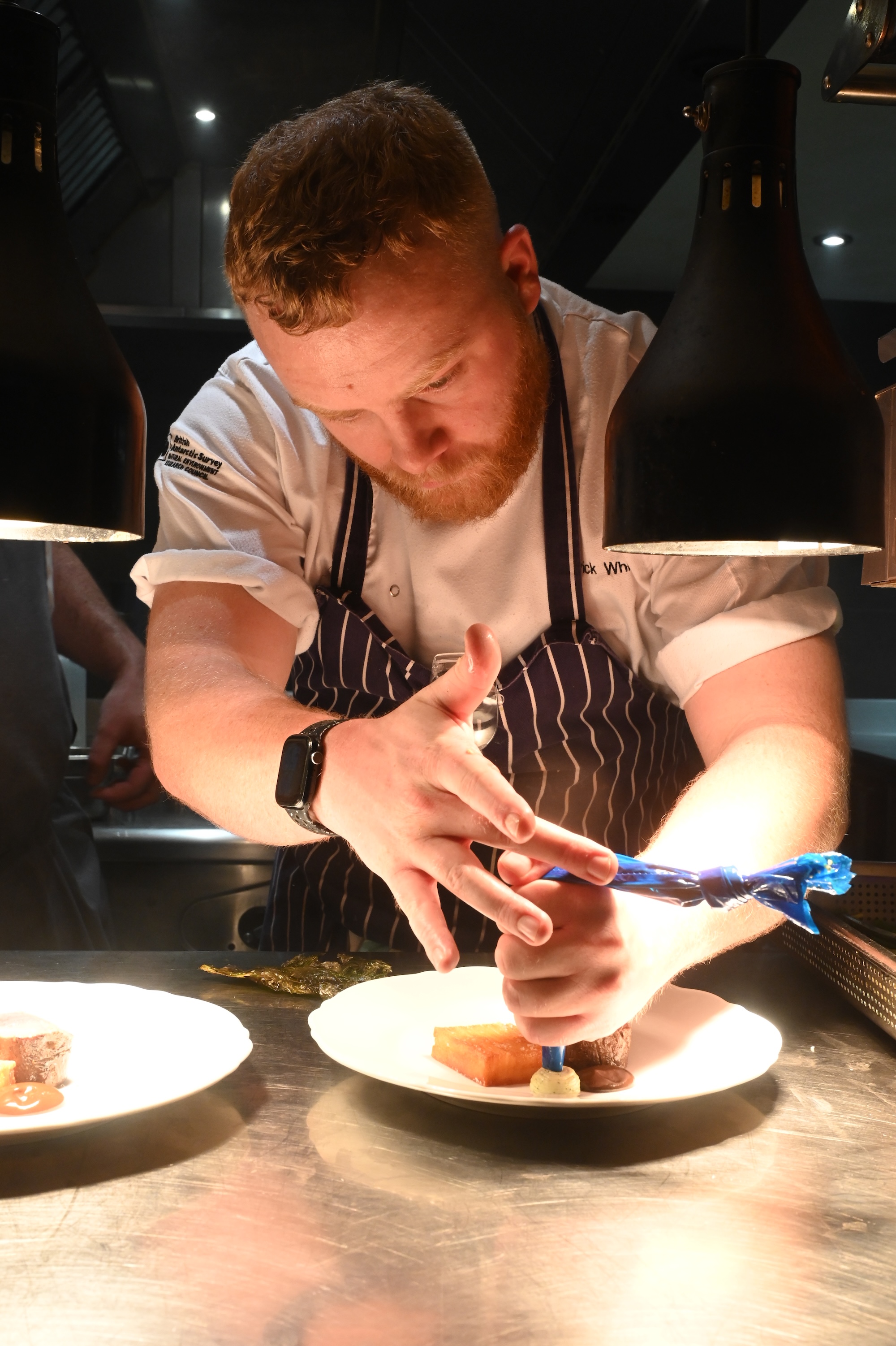
Pastry is always a dark art.
We have some really good people in pastry. I'm not a pastry chef, but I've got good knowledge of it, so it's something I'm constantly trying to keep up with and hone.
The way I like to cook is very ingredient-led. With starters, mains and everything else, it can almost build itself.
Dessert is technical. You can't hide behind something seasonal. You have to have the technique to back it up.
So I'm constantly learning and trying to push myself on that. It's a gap, and I don't like to have a gap.
What's the hardest thing about making seemingly simple food exceptional?
I don't necessarily think it's hard. It's understanding that you need good-quality produce as a base, but then it's how you elevate that.
It's knowing how to make a really nice sauce, how to season something properly or how to make a terrine nicely.
Anyone can take a nice piece of beef and say it's amazing, but it's all the technical skills that go with it that bring everything together.
I think that's sometimes lost. Everyone talks about produce, but they forget how to cook sometimes. They forget how to bring it together.
How do you know when a dish is finished?
It takes a while.
We're constantly tasting. We're always eating. Sometimes they're never finished. It's an ongoing thing because you want it to be nicer every time.
You tweak things and adapt things. Sometimes you take things off because you realise you're doing too much.
It's really important to taste everything as you would if you were sitting down in the restaurant. We eat everything, and nothing will go on until we're happy that it's where it needs to be.
And then we just keep tinkering.
Éloïse: So it's always evolving?
Rob: It's always evolving. You're never 100% happy. There's that little demon in the back of my head that just wants it to be nicer all the time.
One last question. If you could create one temporary dining experience anywhere in the world, with complete creative freedom, where would it be and what would you want people to feel when they left?
I think I'd pick the UK.
It's where I cook, and it's where we have some of the most amazing produce in the world.
Maybe somewhere in the UK, outdoors, cooking with fire. I'd want people to leave with so much more than they expected.
I think fire is an amazing way to do that. Smoke, fire, outdoors. You can play around with temperatures and cooking techniques, and that's really what I love.
There are some amazing places in the world, obviously, but I really root for what we have and what we do here. We've got some amazing produce. Again, it doesn't need a lot done to it. You just need to know how to deal with it.
Give me a field and a tent and a big fire.

@rob_mason.1
Christophe Lerouy
"Cooking elsewhere reminds you that cuisine is alive."
A conversation with Christophe Lerouy