


OK, I admit it - I love the fine in fine dining. But what I've never really loved is the ritual and stuffiness that tends to accompany it.
You probably have your own version of this story. The hush that descends the moment you're seated by an attendant in a razor sharp black suit. The dress code nobody's ever written down but everyone somehow knows. The faint sense of being watched almost as closely as the plate that's been meticulously placed in front of you. Then there's the narrative, admittedly administered in revered tones, delivered by someone who's very clearly rehearsed the line about the provenance of those beautifully glazed cauliflower steaks. I've sat through enough of these now to know the food can be genuinely brilliant yet the whole thing can still leave you feeling a little emotionally empty. Maybe it's something to do with me having to be on my best behaviour.
That's roughly where the conversation began with Eloïse at the start of the brand development work for GAIAMA. Not with a mood board, not with a list of nice-sounding adjectives — just that one small, nagging irritation. Somewhere along the way, proper cooking got pushed behind things that had nothing to do with the cooking itself. Restaurants you have to book three months ahead. Service so formal it forgets to be warm and human. The more we chatted through the brief, the more obvious it became that nothing was actually wrong with the fine food. It was the walls around it, and everything you were quietly expected to do once you were within them.
“Real luxury is emotional, not physical.”
We also talked a lot about the importance of celebrating place. I remember reading a magazine article at the time in which an interview crystallised what Eloïse had been saying. I've dug it out to share - it's a line from Thomas Douzis of Ergon Foods: "I don't want food to be complicated, I want it to taste like the place." That sharpened the whole thing for us in one sentence, really. Strip out the room, the ritual, the performance — and what's left is the bit that actually matters — remarkable food that couldn't have come from anywhere else.
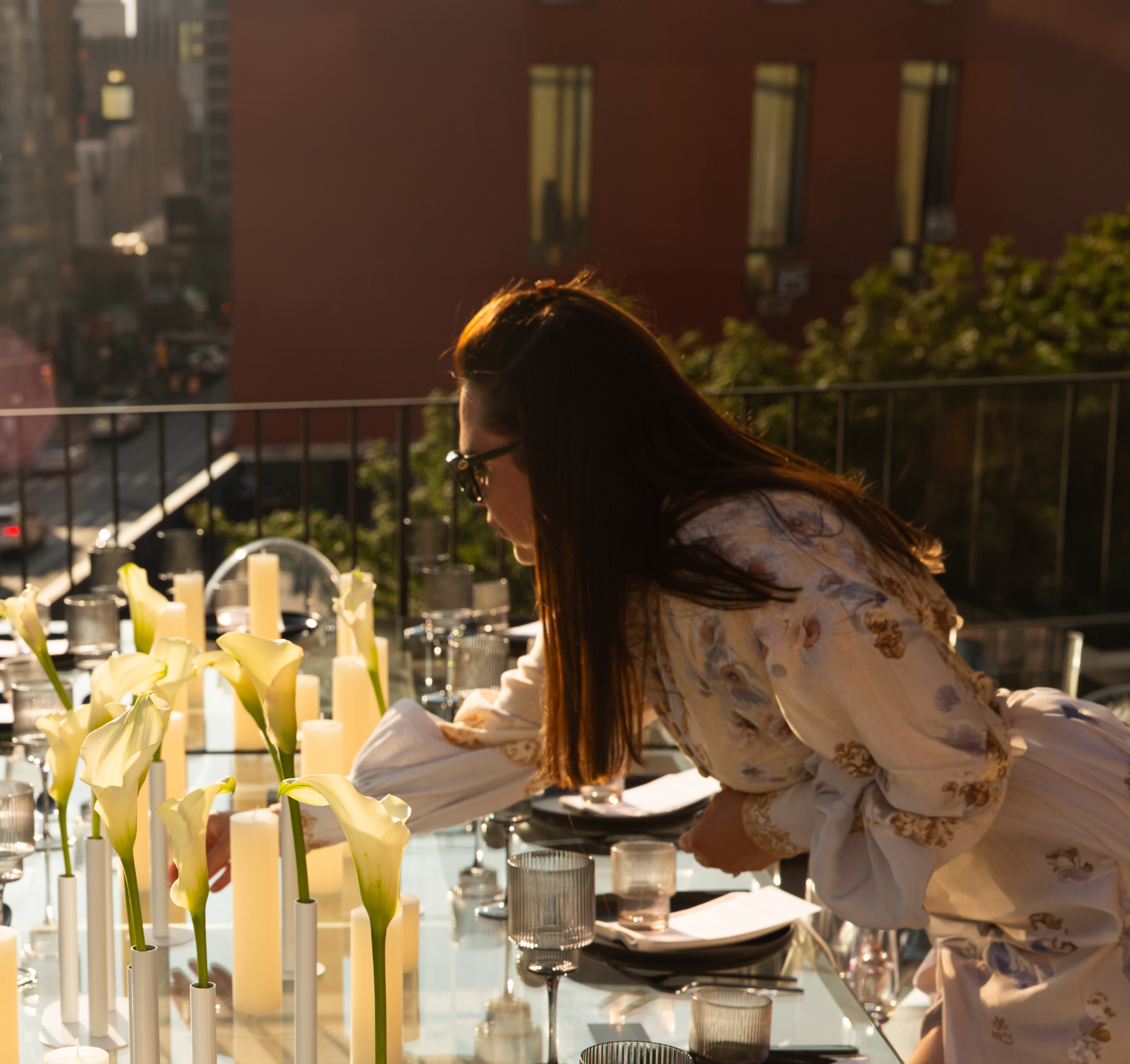
So that was the second fundamental piece of the jigsaw that felt foundational for the brand story: setting. GAIAMA never sits still. It moves from place to place and at each stop the chef has to be able to translate the tastes, seasons and character of that place into a menu. The location isn't incidental to the food in that model. It is the first item on the ingredient list. This gave the whole project another reason to exist. And it's one that you should be able to actually taste the moment you sit down at a GAIAMA table.
So that’s where we began — not with what GAIAMA does, but with what it's gently reacting to. The problem to solve, if you like.
“Start by working out what's not quite right, for someone, somewhere.”
What made this project stand out for me personally was the resisting of the obvious and asking ourselves the harder questions, for example: what would a brand need to be if its entire purpose was to strip the stuffiness out of something without watering down the quality?
That particular question ended up sitting beneath everything we did. Take the five values — Adventurous, Earthful, Generous, Joyful, Refined. Putting "joyful" next to "refined" wasn't an accident. That's the tension the whole brand sits in. GAIAMA isn't trying to be less polished than a Michelin restaurant. It's trying to be warm in a way formal dining rarely manages to achieve. It's as though somewhere along the line someone decided warmth and seriousness were mutually exclusive. We don't think they are.
In fact, that same logic went into the positioning line we took our time to frame — “fine dining experiences beyond the restaurant”. Not many words, but actually they're doing a fair bit of work. They keep the credibility that "fine dining" carries while quietly setting aside most of what that phrase usually drags along with it: the room, the rules, the performance. That line turned out to be a properly useful test once real decisions had to be taken. It even morphed into a shorthand between us - casual fine dining. If something made an evening feel more like sitting in a restaurant — more formal, more distant, more scrutinised — it was probably the wrong call for GAIAMA, however smart it looked in an internal presentation.
The voice work comes from the same place. We described it, only half-jokingly, as a chef's quiet discipline meeting an actress's warmth (both French, of course) — precision without any of the stiffness. Every "we do / we don't" in our tone of voice guidelines is really just there to stop the whole thing sliding back into the exact stuffiness it was built to get away from. In short, the version of refinement we are aiming at for GAIAMA is based on an insight: real luxury is emotional, not physical — it's never about the marble floors and hushed voices, but the feeling of being properly hosted in a remarkable location by people paying attention to you rather than performing at you.
“Putting ‘joyful’ next to ‘refined’ wasn't an accident. That's the tension the whole brand sits in.”
If there's a takeaway for anyone building or sharpening a brand, it's probably this: don't start by working out what you want to say or look like. Start by working out what's not quite right, for someone, somewhere — even if that someone is you.
In GAIAMA's case, the fix was never a nicer restaurant. It was letting the place itself do the talking in a deliciously intentional way.
Written by
Gary Bradshaw,
Brand consultant

The Problem Was Never the Food
“When I look back at the meals that have stayed with me emotionally over the years, very few are tied purely to taste.”

.png)